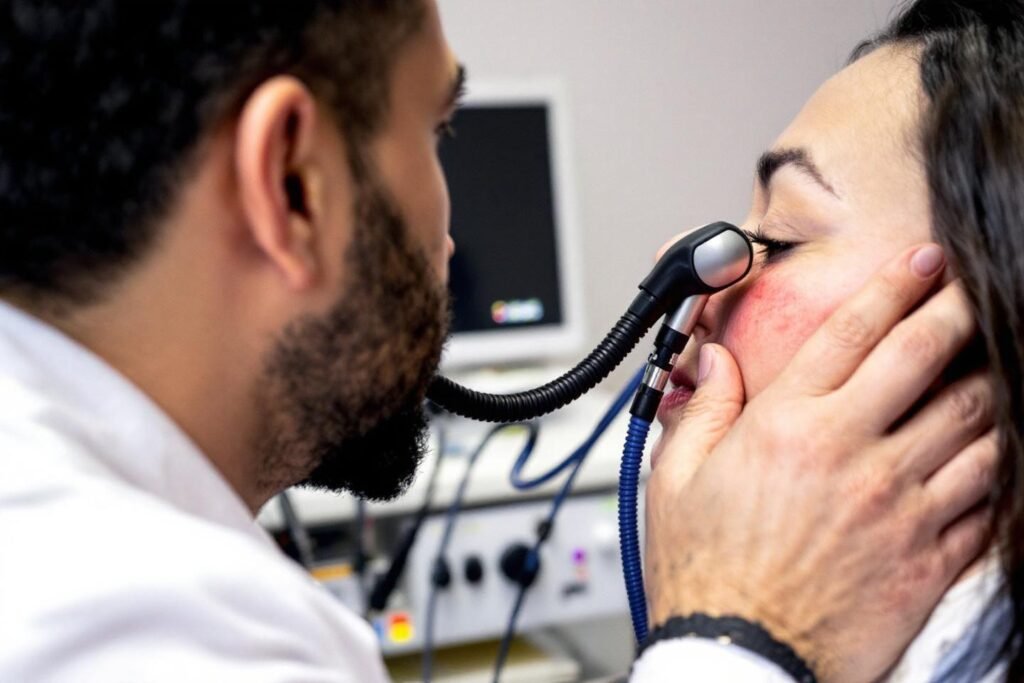
I saw a 58-year-old patient in my surgery last week. Visibly anxious, he told me after some hesitation: "Doctor, I can no longer get a satisfactory erection". This type of consultation for erectile dysfunction represents approximately 30% of my daily activity. since I started practising as a urologist. This situation, although common, is still difficult for many men to deal with.
The trigger for seeking help for erectile dysfunction
Why did I finally decide to seek help for my erectile dysfunction? I regularly hear this question in my practice. Erectile dysfunction affects almost 40% of men over the age of 40But only 20% go to a specialist. The trigger is often the repetition of sexual failures and their impact on self-esteem.
I remember one patient who had waited three years before coming to see me. He said to me: "I tried all the grandmother's remedies before coming to see you. This tendency to self-medicate or deny needlessly prolongs suffering and can mask more serious health problems.. Erectile dysfunction is sometimes the first warning sign of cardiovascular disease.
The most common reasons for seeking help are :
- A gradual decline in the quality of erections
- The impossibility of having satisfactory relationships
- Partner anxiety
- Fear of an underlying illness
- Psychological impact (anxiety, depression)
What my patients tell me during their first consultation
When you first come for a consultation, I hear a variety of stories, but they are often marked by the same distress. Most men feel a mixture of shame, incomprehension and fear when faced with erectile dysfunction.. A 64-year-old salesman recently told me: "Doctor, I feel like my body is betraying me, I don't recognise myself any more.
These words perfectly illustrate the identity upheaval caused by these disorders. I always encourage you to express your emotions without a filter. This discussion is crucial to establishing a precise and personalised diagnosis.. Your experience, medical history and lifestyle help me to pinpoint the origin of the problem.
Here are the questions I always ask:
| Domain | Sample questions |
|---|---|
| History | When did it start? Sudden or gradual onset? |
| Medicines | What treatments are you currently taking? |
| Lifestyle | Alcohol consumption, smoking, physical activity? |
| Psychological | Stress, anxiety, sleep problems? |
The solutions I usually propose
After 15 years in urology, I have developed a personalised approach for each patient. Treatment for erectile dysfunction should target the underlying cause and not just the symptom. I always start with some basic tests: a full blood test, a cardiovascular check and a psychological interview.
Depending on the results, I draw up an appropriate treatment plan. For 60% of my patients, lifestyle changes combined with a temporary course of medication are enough to restore satisfactory erectile function. I was surprised myself to find that simply by reducing work-related stress, a 52-year-old senior executive was able to regain his abilities without any medication.
The treatment options I recommend generally follow this progression:
- Lifestyle adjustments (diet, exercise, sleep)
- Treatment of underlying diseases (diabetes, hypertension)
- Oral medication (PDE5 inhibitors)
- Alternative therapies (intracavernous injections, vacuum)
- Surgical solutions as a last resort
Don't forget that consulting a specialist for erectile dysfunction is a responsible health actIt's not inevitable, and it's not something to be ashamed of. I urge you to take the plunge at the first signs of persistence, because the earlier you start taking action, the better the results.