The article in brief
The first consultation with a urologist is simpler than you might think, despite the fact that patients are often apprehensive.
- The medical interview takes 10-15 minutes to understand your symptoms and history
- The clinical examination is adapted according to gender and may include abdominal palpation or rectal examination
- From further tests such as ultrasound or urinalysis may be prescribed
- Bring your complete medical file and prepared questions optimises consultation
As a practising urologist for over 15 years, I see patients every day who are anxious about their first consultation. This apprehension is completely normal. I remember one 70-year-old patient who had put off his appointment for months because he was afraid of the prostate examination. After his consultation, he told me that "if I'd known it was so simple, I would have come much sooner". That's why today I'd like to explain in detail **how an initial consultation with a urologist works**, to reassure you and help you take the plunge.
Who is the urologist and when should you see him?
The urologist is the specialist who treats pathologies of the urinary system (kidneys, bladder, urethra) in all patients, as well as the male genital system (prostate, testicles, penis). Contrary to popular belief, my consultations are equally suited to men and women, although the reasons often differ.
Warning signs
Several symptoms warrant consult a urologist without delay. In my practice, I find that many patients arrive late, whereas early treatment would have simplified their treatment :
- Difficulty urinating or frequent urination (particularly at night)
- Recurrent urinary tract infections
- Presence of blood in urine
- Persistent lower back or pelvic pain
- Erectile problems or fertility problems in men
The care pathway and making appointments
In France, the standard route is generally through your GP, who will refer you to a urologist if necessary. This ensures better coordination of your care and optimum reimbursement. One question I'm often asked is whether you need a prescription. If reimbursement is important to you, I advise you to obtain this prescription. However, you can consult me directly in an emergency.
The complete procedure for an initial urological consultation
My top priority during a first meeting is to put you at ease. Talking about urinary or sexual problems can be embarrassing, but rest assured that for me, these subjects are part of my everyday professional life. Here's how a consultation in my practice usually goes:
The in-depth medical interview
We'll start with a 10 to 15 minute discussion to get a clear picture of your situation. I'll ask you about your symptoms, how long they've been present and how they've developed, as well as your medical and surgical history. Last year, a patient suffering from urinary problems failed to mention to me an operation he had undergone 20 years earlier. This information proved crucial to his diagnosis. So don't be afraid to be thorough, even about details that seem trivial to you.
The right clinical examination
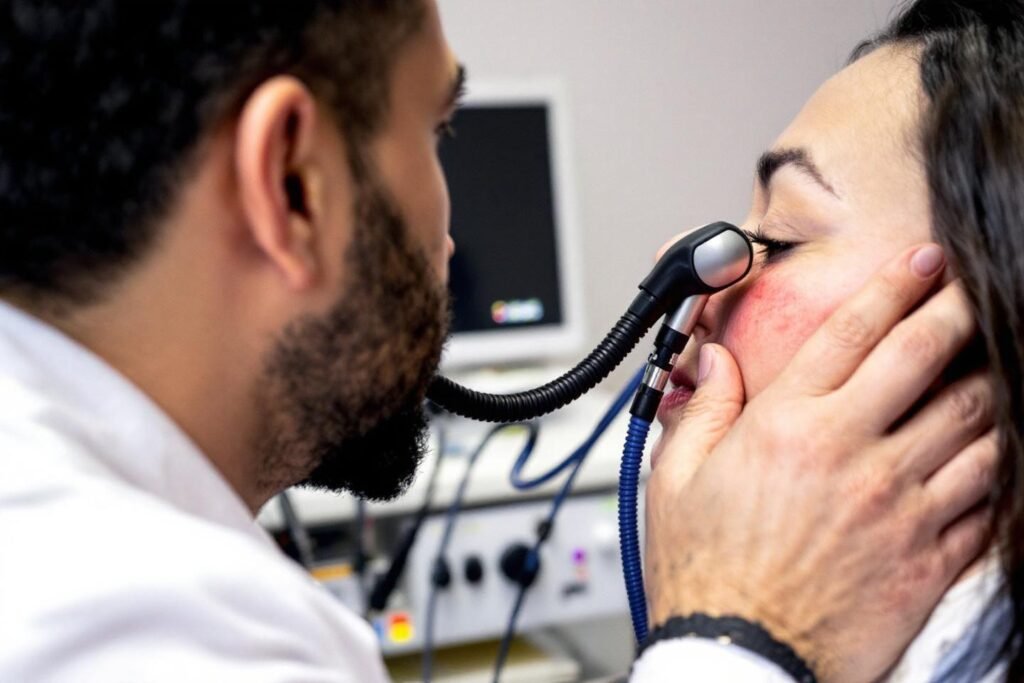
After this interview, I will carry out a physical examination, which will vary according to your gender and your symptoms:
| Type of examination | Men | Women |
|---|---|---|
| Abdominal palpation | Systematics | Systematics |
| Examination of the genitals | Systematics | If necessary |
| Rectal touch | Common (prostate assessment) | Rare |
| Gynaecological examination | Not applicable | If incontinence/prolapse problems |
The digital rectal examination, often dreaded by my male patients, is a quick (about 30 seconds) and generally painless procedure. It allows me to assess the size, shape and consistency of your prostate, which is essential for many diagnoses.
Any additional examinations
Depending on the results of the interview and clinical examination, I will be able to carry out some of the following immediately additional tests at this first appointment or prescribe some for a later date:
- Renal, bladder or prostate ultrasound
- Urinalysis by strip
- Urine flow measurement (flowmetry)
- Blood test (PSA for men over 50)
**These complementary tests** are rarely all necessary at the first consultation. I prescribe them on the basis of your symptoms to avoid unnecessary investigations.
Optimal preparation for your appointment with the urologist
To make the most of your first consultation, here are a few practical tips that I usually give to my new patients:
Documents and information to be prepared
I suggest that you come with your medical records, which should be as complete as possible: current prescriptions, results of recent tests (blood tests, urine tests, X-rays) and reports of any surgical operations. This preparation will save us precious time. *Please make a note of any questions you may have, so that you don't forget anything during the consultation*.
Managing your bladder before your consultation
A frequent question concerns how full the bladder is. If you suffer from micturition problems, it's best to come with a moderately full bladder. This will enable me to carry out a flowmeter if necessary. On the other hand, if no details are given when the appointment is made, a normal bladder will suffice.
Psychological aspects and stress management
Anxiety is natural before a urology consultation. I always try to establish a climate of trust and respect so that you feel at ease. Don't hesitate to let me know if you have any concerns - my priority is your comfort and health. The vast majority of my patients are relieved after our first meeting.
Towards personalised monitoring of your urinary health
At the end of this initial consultation, I will clearly explain my diagnosis and possible treatment options. Treatment can range from simple dietary advice to surgery, medication or rehabilitation. The important thing is that together we decide on the strategy best suited to your situation and expectations.
Remember that urinary and sexual health is an integral part of your overall well-being. Don't let embarrassment stop you from seeking help - we're here to help you, without judgement and in complete confidentiality.
Additional sources: wiki urology and urology department.