The article in brief
A urological consultation is an essential step in diagnosing and treating urinary and genital problems. Here are the key points:
- Preparation : Gather medical documents and prepare a list of symptoms
- Course Medical interview, clinical examination and any additional tests required
- Diagnosis Clear explanation and suggest an appropriate course of treatment
- Follow-up Planning the next steps and answers to questions
A urology consultation is a crucial step in diagnosing and treating various problems related to the urinary and genital systems. As an experienced urologist, I will guide you through the various phases of this consultation, so that you are fully prepared and confident for your appointment.
Preparation and documents required for the consultation
Before you go to your urology consultationIt's essential to be well prepared. Here are the key points to remember:
Gather relevant medical documents
To make the most of your consultation, bring the following documents with you:
- Results of recent examinations (blood tests, urine tests, medical images)
- Prescriptions for your current treatments
- Records of previous consultations or hospitalisations
- Health record (for children)
This information will give me an overall view of your state of health and help me avoid repeating unnecessary tests.
Prepare a list of your symptoms and questions
Make a note of all the symptoms you experience, even those that seem harmless. Don't hesitate to detail their frequency, intensity and duration. Also prepare a list of questions you'd like to ask me. This will help you to make sure you don't forget anything during the consultation.
Specific instructions before the consultation
Depending on the reason for your consultation, I may ask you to come in full or empty bladder. As a general rule, for a first appointment, it's best to come with a moderately full bladder. This facilitates certain examinations, such as bladder ultrasound. If you are in any doubt, please do not hesitate to contact my secretary's office for further information.
Course of the consultation with the urologist
When you arrive at the surgery, you will be greeted by my assistant, who will check your administrative documents. The consultation will then take place in several stages:
The in-depth medical interview
The consultation begins with an open dialogue. I'll ask you questions about your medical history, current treatments and the reasons for your visit. This is the time to tell me about your symptoms and concerns. Don't worry, I'm used to tackling intimate subjects with tact and professionalism.
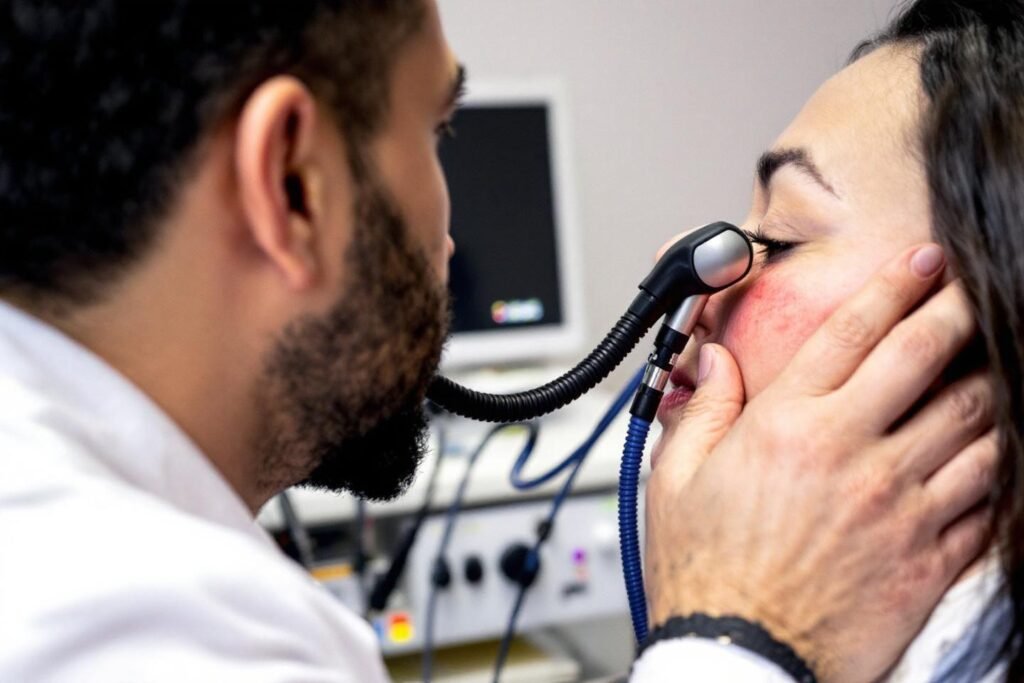
Clinical examination
After the interview, I will carry out a physical examination tailored to your situation. This may include:
- Abdominal palpation
- An examination of the external genitalia
- A rectal examination (for men)
- A gynaecological examination (for women)
These examinations are essential for detecting any abnormalities. I will make sure that I explain every procedure to you and respect your privacy throughout the examination.
Any additional examinations
Depending on the results of the interview and clinical examination, I may prescribe further tests. Here is an overview of the most common urology tests:
| Examination | Description | Indications |
|---|---|---|
| Ultrasound | Ultrasound imaging of the urinary and genital organs | Visualisation of the kidneys, bladder and prostate |
| Urinalysis | Biological examination of urine | Screening for infections, stones and tumours |
| Flowmetry | Urine flow measurement | Assessment of urinary disorders |
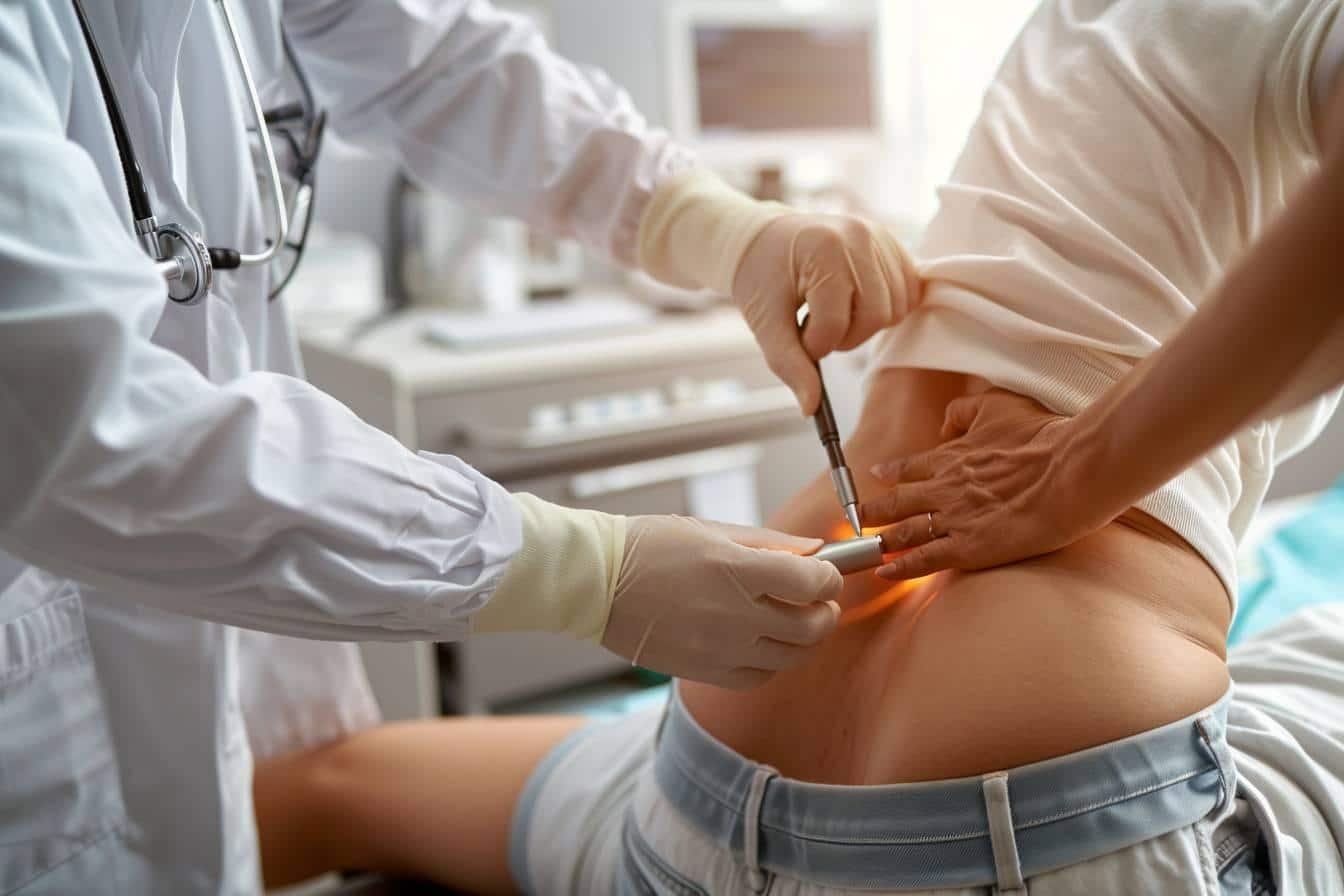
I remember a patient who came to see me with lower back pain. Thanks to an ultrasound scan carried out during the consultation, we were able to quickly diagnose a kidney stone and implement the appropriate treatment.
Diagnosis and treatment prospects
The final part of the consultation is devoted to analysing the results and drawing up a treatment plan if necessary.
Announcement of diagnosis
I'll take the time to explain the diagnosis clearly, making sure you understand the implications. Don't hesitate to ask me questions if there are any points you find unclear. My role is to inform you in a transparent and caring way.
Proposed treatment
Depending on the diagnosis, I will suggest various treatment options. These may range from simple follow-up treatment to medication or even surgery. Together, we will discuss the advantages and disadvantages of each option, so that we can make the best decision for your health.
For example, for a patient suffering frombenign prostatic hyperplasiaIf the problem persists, I would then consider less invasive surgical options such as laser photovaporisation. If the problems persist, we would then consider less invasive surgical options such as laser photovaporisation.
Follow-up and next steps
At the end of the consultation, I will explain the next steps in your care. This may include scheduling further tests, prescribing medication or scheduling a new follow-up consultation. I'll make sure you leave with all the information you need for the rest of your treatment.
Don't forget that urology consultation is a privileged moment of exchange. My aim is to offer you personalised care and to address all your concerns. If you have any questions after the consultation, please do not hesitate to contact my office for further clarification.
As a specialist with a passion for my work, I strive to create an atmosphere of trust and professionalism during every consultation. Your health and well-being are my absolute priority.
Sources :
wiki urology
urology department